
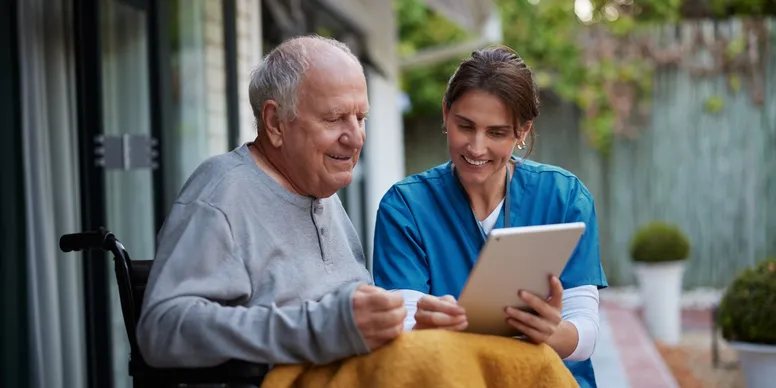
Home lets stroke recovery follow a senior's own pace, in their own space, with the people who matter most close by.
Hospitals play an important role in stroke treatment, but they're really just the beginning. The bulk of recovery — regaining strength, relearning daily routines, rebuilding confidence — tends to unfold at home. That's where stroke recovery home care steps in, offering a calmer, more familiar setting for seniors to keep progressing.
Worth knowing: recovering at home doesn't mean recovering alone. The right home care support fills in exactly where family can't be there every hour, without taking away a senior's sense of independence.
What this guide covers
Why recovering at home benefits seniors after a stroke
Most older adults recover better at home than in an unfamiliar clinical setting. Being surrounded by family, sleeping in their own bed, and moving through familiar rooms can genuinely lift a senior's mood and outlook. Home recovery also means the care routine bends around the person, instead of the person having to adapt to a facility's schedule.
🌿 Key advantages of recovering at home
Greater comfort and emotional stability, lower exposure to hospital-acquired infections, rehabilitation that responds to individual targets, more involvement from family members, and familiar surroundings that help rebuild confidence.
Supporting Physical Rehabilitation
Physical rehabilitation sits at the center of stroke recovery. Many seniors experience paralysis, weakness, reduced motor control, or a smaller range of motion after a stroke.
Caregivers help by:
- Assisting with safe ambulation and transfers
- Helping with prescribed mobility exercises
- Encouraging consistent activity to avoid stiffness
- Assisting with correct positioning to ease pain
- Watching closely for signs of fatigue
Caregivers aren't a substitute for a licensed physiotherapist — they help carry the prescribed program into everyday life, consistently.
Assistance with Daily Activities During Recovery
Many stroke survivors go through a stretch where everyday tasks simply can't be done alone. Left unsupported, that can lead to frustration, unnecessary falls, or injury.
Home caregivers can help with:
- Bathing and personal hygiene
- Dressing and grooming
- Meal preparation and feeding assistance when needed
- Medication reminders
- Toileting and continence support
- Light housekeeping
Consistent daily support reduces the risk of frustration-driven accidents during recovery.
Supporting Speech and Cognitive Recovery
Some seniors come out of a stroke with speech difficulties, forgetfulness, or reduced concentration. These tend to improve gradually with time and steady practice.
Caregivers keep the brain engaged through conversation, reading, memory games, and daily routines — and can help reinforce speech exercises a therapist has prescribed.
Preventing Falls and Reducing Safety Risks at Home
Balance problems and muscle weakness are common after a stroke, which makes falling a real and ongoing concern.
Common safety measures include:
- Removing loose rugs and clutter
- Keeping walkways clear
- Providing support on stairs
- Assisting with bathroom safety
- Encouraging approved mobility aids like walkers
A caregiver's presence during movement around the home is one of the simplest ways to lower fall risk.
Nutrition and Hydration During Stroke Recovery
Good nutrition supports healing and overall strength after a stroke, but changes in taste, appetite, or swallowing can make eating well harder than it sounds.
Caregivers can help by:
- Preparing meals that follow dietary guidelines
- Encouraging adequate hydration
- Monitoring eating habits
- Helping with feeding when required
- Flagging concerns like weight loss to family members
Emotional support makes recovery easier
Stroke recovery carries a mental toll as much as a physical one — anxiety, low mood, and even shame are common in the months that follow.
Regular visits and companionship help ease the isolation many seniors feel during this period. Having someone present consistently — to celebrate small wins and offer encouragement — tends to keep motivation for therapy and daily activity steadier over time.
Helping family caregivers avoid burnout
Family members often become the default full-time caregiver once a loved one comes home. It's a meaningful role, but it can wear people down physically and emotionally.
Respite care lets qualified home care professionals step in so family members can rest, work, and simply spend time with their loved one — without carrying the entire load alone.
Personalized care plans promote better long-term recovery
Every stroke survivor is working toward something different — walking again, regaining speech, rebuilding strength, or simply managing daily activities independently.
Care plans are typically built around
- Medical recommendations
- Functional abilities
- Rehabilitation goals
- Personal preferences
- Family involvement
Why flexibility matters
- Recovery needs shift week to week, not just month to month
- A static plan can fall behind actual progress
- Family involvement should be built in, not an afterthought
- The goal is independence, at the person's own pace
As recovery progresses, care plans can be adjusted to match evolving needs — so seniors keep receiving the right level of support at every stage.
When should families consider home care after a stroke?
Home care may be worth exploring when a senior:
- Has recently been discharged from hospital
- Needs assistance with mobility or personal care
- Lives alone
- Has difficulty managing medications
- Is at risk of falls
- Requires ongoing rehabilitation support
- Needs companionship during recovery
Combining tailored support, emotional encouragement, and hands-on help with rehabilitation and daily activities allows seniors to keep recovering in the place they feel most secure — their own home. Paired with medical guidance, it gives families a clearer path toward greater independence and a better quality of life.
Get Compassionate Stroke Recovery Support with Evernest HomeCare
When a loved one is recovering from a stroke, having attentive caregivers involved can make the whole process safer and less stressful — for them and for you. Evernest HomeCare offers tailored stroke recovery home care designed to support mobility, provide personal care and companionship, and carry daily rehabilitation forward, all from the comfort of home.
How Evernest HomeCare supports stroke recovery
- Assistance with safe ambulation, transfers, and mobility exercises
- Personal care support — bathing, dressing, grooming, and toileting
- Meal preparation and feeding assistance where needed
- Medication reminders to keep recovery on track
- Conversation, reading, and memory activities for cognitive stimulation
- Fall-prevention support around the home
- Companionship to ease anxiety, low mood, and isolation
- Respite support so family caregivers can rest and recharge
- Personalized, evolving care plans built around real rehabilitation goals
Frequently asked questions
Supporting a loved one through stroke recovery?
Our caregivers help stroke survivors every day — with mobility, personal care, cognitive stimulation, and companionship. Talk to our team for free, with no pressure and no obligation.
More guides on our blog · Explore senior home care services · Call 204 312 0532