
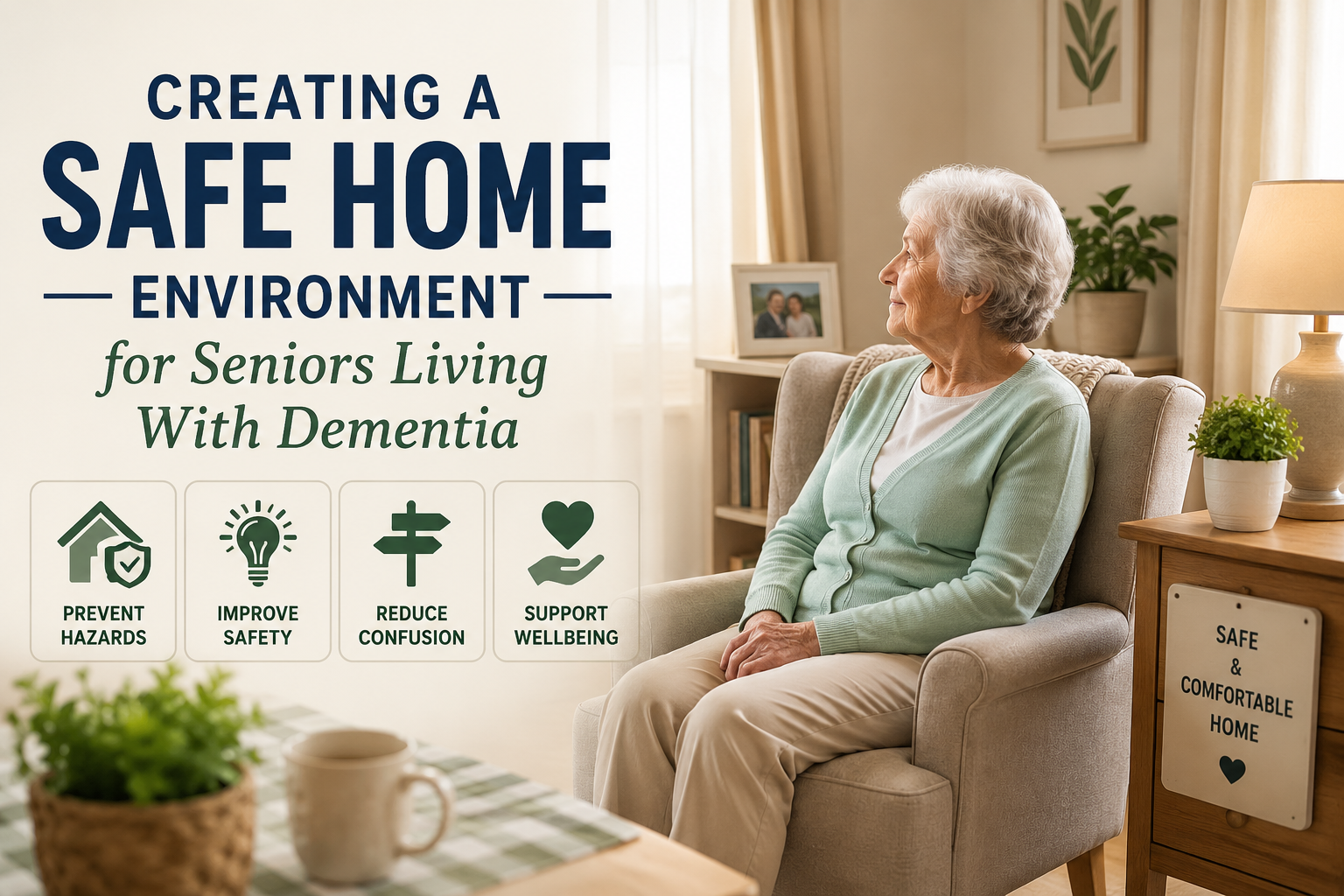
Creating a safe home environment for a senior living with dementia is one of the most important things a family can do. Dementia changes how a person understands space, responds to daily tasks, and reacts to ordinary situations. A hallway that once felt familiar may now feel confusing. A kitchen routine that used to be simple may suddenly become unsafe. Even a quiet evening at home can become more difficult when memory loss, disorientation, or poor judgement are involved.
The goal of dementia home safety is not to make a home feel clinical or restrictive. It is to make daily life more manageable. A safer home can help reduce falls, lower stress, prevent wandering, and support independence for longer. Just as importantly, it can help a senior feel more secure in the place they know best.
For many families, the best approach is to combine home adjustments with ongoing support. That might include help from specialised Alzheimer’s and dementia care, short breaks through respite care, or more regular support with routines through senior home care services. Small practical changes and the right level of care can make a real difference.
Key idea: a dementia-friendly home should balance safety, dignity, and independence. The aim is not to take control away from the senior, but to make everyday life safer and less confusing.
What this guide covers
Why home safety matters for seniors with dementia
Dementia affects memory, judgement, problem-solving, and spatial awareness. That means ordinary tasks can gradually become difficult or unsafe. A person may forget that the stove is on, become confused in their own hallway, misjudge the height of a step, or struggle to recognise a hazard that once seemed obvious. These changes are not carelessness. They are part of the condition, and the home needs to adapt to that reality.
Many families first notice safety concerns when a loved one begins repeating actions, leaving doors open, forgetting medication, or feeling more unsettled at night. Others realise the home is no longer working well after a fall or a wandering incident. But it is much better to make changes early, before a crisis happens. If you are already seeing increased confusion, it may also help to read Alzheimer’s vs Dementia — What Families in Manitoba Need to Know for a clearer understanding of how symptoms can affect daily life.
Start with a room-by-room home safety assessment
Before making changes, take time to look at the home carefully. Walk through each room and think about what might be confusing, difficult, or unsafe. Try to look at the space through the eyes of someone who may have memory loss, reduced judgement, slower mobility, or trouble recognising familiar objects.
Common things to check during a home assessment
- Loose rugs or uneven flooring
- Poor lighting in hallways, bathrooms, or stairs
- Cluttered walkways or small items on the floor
- Unsafe appliances or hard-to-use switches
- Sharp furniture corners or unstable chairs
- Difficult locks, confusing handles, or unsecured exits
- Medication storage that is easy to misuse
It can also help to notice what the senior uses most often. Which chair do they sit in? Which room do they go to at night? Which cupboards do they open every day? Good dementia home safety planning is practical. It focuses on the spaces and routines that matter most.
Reducing fall risks throughout the home
Falls are one of the biggest concerns for older adults, especially when dementia affects attention, balance, and depth perception. A safer home starts with making movement easier and more predictable.
Remove tripping hazards
Clear away loose rugs, electrical cords, footstools, small decorative objects, and clutter from walking paths. Stable, open walkways reduce both falls and confusion.
Improve lighting
Make sure hallways, staircases, entrances, and bathrooms are well-lit. Bedside lamps and nightlights can help if the senior gets up during the night.
Add support features
Handrails, grab bars, non-slip surfaces, and sturdy seating can all make movement safer and less stressful.
Motion-activated lighting is often especially helpful at night, when confusion can increase. If mobility is already becoming more difficult, extra support through nursing care or hands-on in-home assistance may also reduce the risk of injury.
Creating a safer kitchen environment
The kitchen can be one of the most dangerous areas of the home for someone living with dementia. Sharp tools, hot surfaces, electrical appliances, and cleaning products all create risks. At the same time, the kitchen is a familiar and meaningful space, so families often want to make it safer without completely taking it away from the senior.
A good first step is securing dangerous items. Knives, medications, lighters, and cleaning products should be stored safely out of easy reach or in locked cupboards where appropriate. If cooking has become unsafe, consider safety features such as automatic stove shut-off devices, appliance timers, or supervised meal routines.
Keeping the kitchen layout simple can also reduce frustration. Clear countertops, easy-to-find dishes, and labelled cupboards can make daily tasks feel less overwhelming. In some homes, support from homemaking services can take pressure off the family while helping the senior remain involved in a safe, familiar routine.
Bathroom safety should never be overlooked
Bathrooms are often small, slippery, and difficult to navigate. That makes them one of the highest-risk areas in the home. Even confident seniors can struggle if water is on the floor, the toilet is too low, or the shower feels unstable.
Simple safety changes can make a big difference. Non-slip mats, grab rails near the toilet and shower, shower chairs, and raised toilet seats can all improve stability. Bright lighting and strong colour contrast may also help a senior better identify where things are.
Water temperature is another important issue. A person living with dementia may have difficulty judging whether water is too hot. Anti-scald devices and temperature controls can reduce the risk of burns. If bathing is becoming stressful or unsafe, families may benefit from extra support through in-home dementia care or scheduled personal care assistance.
Making the bedroom calm, familiar, and secure
A bedroom should support rest, comfort, and orientation. But if the room is cluttered, dark, or difficult to move through, it can become another source of confusion. Keeping the space simple is usually best. Too much furniture, piles of clothing, or hard-to-find essentials can increase distress and create fall risks.
Helpful additions often include large clocks, easy-to-read calendars, familiar family photographs, and clearly organised storage. These small cues can support memory and create a stronger sense of orientation. For seniors who become more unsettled at night, soft nightlights and illuminated pathways to the bathroom can improve safety without creating a harsh environment.
Some families notice that nighttime confusion becomes much harder to manage over time. If this is happening often, a more structured plan may be needed. In some situations, support such as 24/7 in-home care can help families manage night-time safety more confidently.
Managing wandering risks in a respectful way
Wandering is one of the most worrying issues for many families caring for someone with dementia. A person may leave the home because they feel confused, believe they need to go to work, want to find someone familiar, or are simply following an old habit. For them, the action may feel completely logical.
Entry and exit points should be reviewed carefully. Door alarms, simple monitoring systems, and thoughtfully placed locks can reduce unsupervised exits. Some families also use visual barriers on doors if they help reduce the urge to leave. The aim is not punishment or control. It is protection.
If wandering is a real concern, identification measures are also important. Medical ID bracelets, cards with contact details, and GPS tracking devices can help if someone leaves the home unexpectedly. If your family is already dealing with these situations regularly, the article In-Home Dementia Care in Southern Manitoba may be useful as a next step.
Reducing confusion with visual cues and simpler design
Many people living with dementia do better in spaces that are calm, predictable, and easy to understand. Clear visual cues can reduce anxiety and help the person stay oriented. This can be as simple as labelling rooms, using signs with both words and pictures, or keeping important items in the same place every day.
Busy patterns, heavy visual clutter, and frequent layout changes often make confusion worse. A simpler environment is usually easier to navigate. Try to keep glasses, remotes, keys, phones, and other daily-use items in consistent places. Repetition and familiarity matter a great deal.
It is also important not to change too much at once. A completely rearranged home can feel unfamiliar and upsetting. Dementia home safety works best when changes are gradual, practical, and based on the person’s real habits and needs.
Medication safety becomes more important over time
Medication routines can become difficult to manage as dementia progresses. Missed doses, duplicate doses, or mixing up prescriptions can all create serious problems. This is why medication safety should be treated as a core part of home safety, not an afterthought.
Helpful medication safety tools
- Pill organisers with clear day and time labels
- Automated dispensers
- Phone or device-based reminders
- Secure storage to prevent accidental misuse
- Regular family review of current medications
When medication management starts to feel unreliable, families should not wait until a mistake happens. Professional support through nursing care services can help bring more consistency and peace of mind.
Do not forget fire and emergency safety
Emergency planning is a vital part of creating a safe home environment for seniors living with dementia. Smoke alarms, carbon monoxide detectors, and fire extinguishers should all be installed and tested regularly. Important phone numbers should be easy to find, not buried in a drawer or stored only in a mobile phone.
Families should also think about everyday fire risks. Unattended candles, portable heaters placed too close to fabrics, and overloaded electrical sockets can all create danger. If a senior is still trying to cook but forgetting steps, that should be treated as a serious warning sign rather than a minor concern.
In many homes, the need for emergency planning becomes clearer as dementia progresses. If the current care setup is starting to feel fragile, bringing in more regular support early can help prevent stressful or unsafe situations later.
Safety should support emotional wellbeing too
A home can be physically safe and still feel emotionally difficult. That is why emotional comfort matters just as much as hazard prevention. A dementia-friendly home should still feel warm, familiar, and personal. Family photographs, favourite blankets, recognisable furniture, and calming routines can all provide comfort.
Quiet spaces are especially helpful for seniors who become overwhelmed easily. Natural light, soft seating, and less background noise can help reduce agitation. Where possible, it is also good to encourage safe participation in familiar activities. Folding towels, helping set the table, watering plants, or listening to favourite music can all support dignity and a sense of purpose.
Families sometimes focus so much on risk that they forget the emotional side of care. But comfort, familiarity, and routine often help reduce distress just as much as physical modifications do.
Using technology to improve dementia home safety
Technology cannot replace human care, but it can strengthen safety when used thoughtfully. Smart door sensors, motion detectors, medication reminders, emergency response systems, and video monitoring can all help families respond more quickly when something changes. GPS devices may also help if wandering becomes more likely.
These tools are often most helpful when family members live farther away or when a loved one spends periods of time alone at home. They can provide reassurance, but they work best as part of a wider plan that includes supervision, clear routines, and practical support.
When home changes may no longer be enough
As dementia progresses, there may come a point when home modifications alone are no longer enough to keep someone safe. Frequent wandering, repeated falls, increasing confusion, unsafe cooking, medication problems, or severe night-time disruption are all signs that the care plan may need to change.
This does not mean the family has failed. It means the person’s needs have changed. In many cases, additional support can still allow the senior to remain at home. Options may include more regular dementia care, temporary relief through respite services, or broader in-home support through elder and senior home care.
Regularly reassessing the home, routines, and level of supervision is one of the best ways to stay ahead of change. Waiting until a crisis makes decisions harder for everyone.
Final thoughts
Creating a safe home environment for seniors living with dementia is about more than preventing accidents. It is about making everyday life calmer, clearer, and more manageable. From better lighting and fewer tripping hazards to safer bathrooms, simple kitchen changes, and stronger support with routines, every improvement can help a senior feel more secure in familiar surroundings.
The best dementia home safety plans grow with the person. Needs change over time, and the home should change too. With thoughtful adjustments and the right support, families can help loved ones stay safer, maintain dignity, and enjoy a better quality of life at home for as long as possible.
Need help creating a safer home routine for a loved one with dementia?
Homecare Evernest supports Manitoba families with compassionate in-home dementia care, respite support, and personalised care planning for changing needs.
You can also view more support options on our services page or browse more family resources on our blog.