
Parkinson’s Home Care Guide
Parkinson's Home Care
Home Care Support for Seniors Living With Parkinson's Disease
A tailored Parkinson's home care plan helps seniors retain their independence while staying safe, comfortable, and supported — here's what families need to know about daily care, medication, home safety, and choosing the right support.
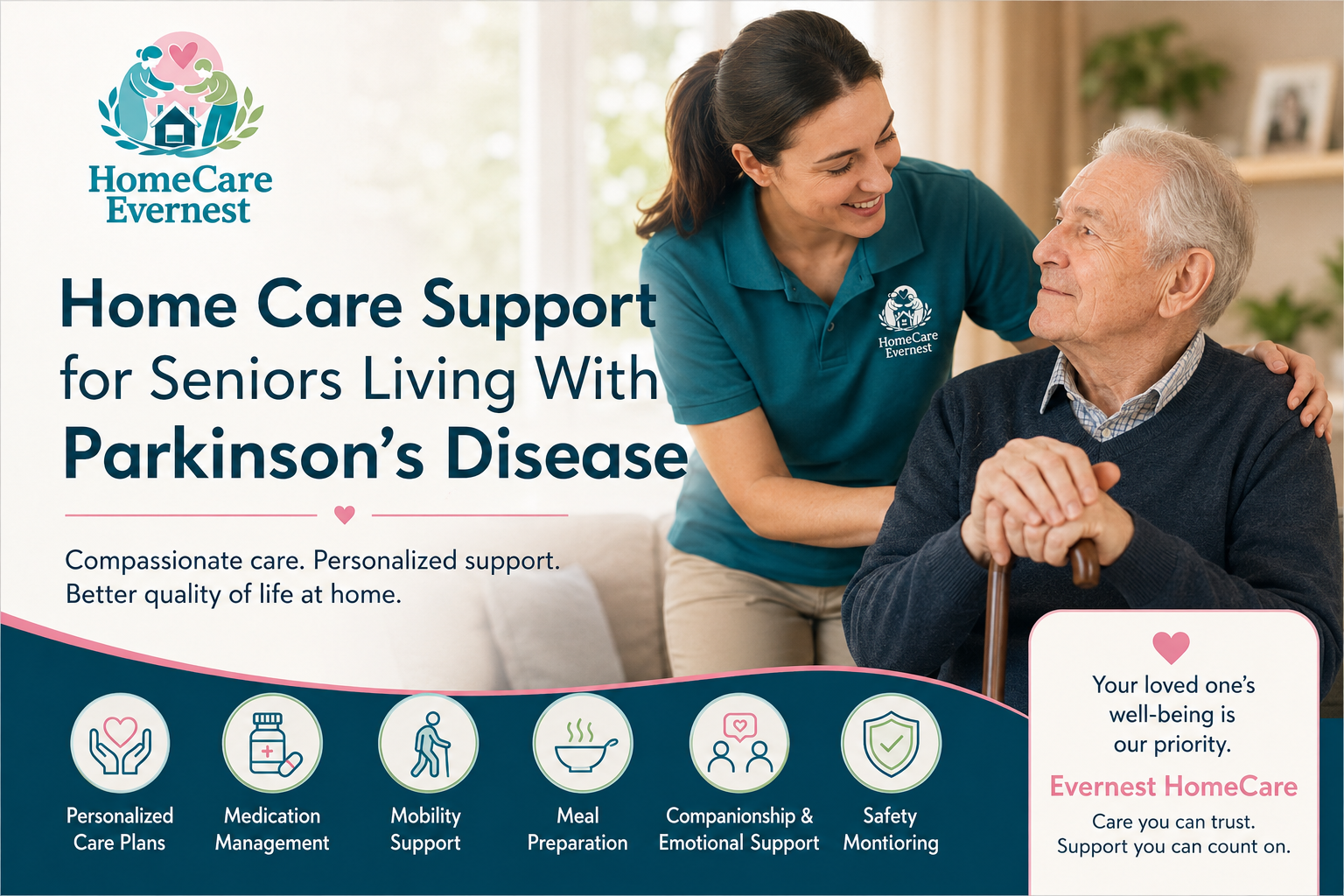
Parkinson's disease is a chronic, progressive neurological disorder that gradually affects movement, balance, and everyday independence. For many older adults living with Parkinson's, tasks that once felt effortless — getting dressed, preparing a meal, or simply walking across a room — can become increasingly difficult as the disease advances.
The right care strategy can help seniors retain their independence while staying comfortable, safe, and supported. A tailored Parkinson's home care plan ensures individual needs are met and that the senior lives in a home environment where every member of the household feels valued and respected.
With the support of trained caregivers, families don't have to choose between honouring a loved one's independence and keeping them safe. Both are possible with the right plan in place.
Understanding Parkinson's Disease in Seniors
Parkinson's is a nervous system disorder that causes tremors, stiffness, slowed movement, and balance issues. Symptoms vary from person to person, but most seniors gradually notice changes in how independently they can carry out daily activities, including:
Getting dressed or bathing independently
Preparing meals safely
Walking steadily and avoiding falls
Keeping up with medication schedules
Staying socially and mentally engaged
Managing changes in mood or emotion
Beyond the physical symptoms, seniors with Parkinson's disease may also experience emotional difficulties — feeling angry, worried, depressed, or isolated while adjusting to the changes the disease brings. Once families and caregivers understand these challenges, they're far better equipped to offer support that respects the senior's personality and pace, rather than rushing or overriding their independence.
The Importance of Personalized Care Plans
No two people living with Parkinson's are the same, which is why a one-size-fits-all approach rarely works. A personalized care plan should be built around the senior's health status, lifestyle, and personal goals, and typically includes:
Assistance with daily activities
Medication reminders
Mobility support
Meal preparation
Companionship
Safety monitoring
Caregivers working in partnership with families are one of the most reliable ways to make sure seniors get the support they need while continuing to live an active, engaged life. This kind of personalized approach pairs naturally with our broader nursing care and 24/7 home care services for families who need more continuous support.
Supporting Daily Activities and Independence
Helping seniors preserve their independence for as long as possible is a primary goal of good senior care. Caregivers should offer assistance while still allowing a senior to make their own decisions and complete activities on their own whenever it's safe to do so.
Simple Strategies That Make Daily Routines Easier
Offering additional time for activities to be completed, keeping personal items in simple and accessible places, encouraging safe movement and exercise, providing assistance only when it's genuinely needed, and building consistent daily routines — small adjustments like these help seniors with Parkinson's stay confident and in control of their day. Our homemaking support services are designed to fit around these routines without taking over them.
Managing Medication and Health Needs
Managing medication is one of the most important aspects of caring for a person with Parkinson's. Many seniors require strict dosing schedules to control symptoms and continue with daily life, and missed or mistimed doses can significantly affect how they feel and function.
How Caregivers Help With Medication and Monitoring
Caregivers can assist by providing medication reminders, keeping medication lists updated, tracking appointments, and communicating any changes with healthcare providers. Well-maintained health monitoring allows families to spot issues early and get the senior the medical care they need, when they need it.
Creating a Safe Home Environment
Balance and movement are often altered by Parkinson's, which raises the risk of falls for elderly individuals. Improving safety within the home reduces hazards and helps seniors move with more confidence.
Removing clutter and loose rugs
Installing grab bars in bathrooms
Improving lighting throughout the home
Keeping commonly used items close at hand
Adding supportive equipment when recommended
A secure environment allows older adults to move freely and comfortably while preventing avoidable injuries. If mobility needs increase over time, our post-operative home care team can also step in following a fall, surgery, or hospital stay.
Providing Emotional and Social Support
Coping with Parkinson's is hard emotionally as well as physically. Older adults may feel lonely if they're no longer able to take part in activities they used to enjoy, and that isolation can quietly affect their overall well-being.
Ways Caregivers Provide Emotional Support
Spending quality time with seniors, encouraging hobbies and interests, supporting social connections, providing meaningful conversation, and promoting a positive daily routine all help reduce feelings of loneliness. Having company can meaningfully improve emotional well-being alongside the physical care a senior receives. Our companion care services are built specifically around this kind of connection.
The Role of Family Caregivers
Family members frequently provide valuable, hands-on support for seniors living with Parkinson's. But caregiving can become overwhelming if the responsibility isn't shared or distributed appropriately.
Family caregivers often find real value in bringing in auxiliary support so a professional can help manage the physical demands of care, while family members are freed up to focus on spending quality time together instead of managing every task alone. If caregiving responsibilities are starting to feel like too much, our guide on respite care explains how short-term relief support can help prevent burnout.
The Right Support Makes Everyday Life Easier
An effective Parkinson's home care plan blends professional expertise with genuine personal attention — so no family has to manage it alone.
Book a Free ConsultationChoosing the Right Home Care Support
Choosing a care provider is an important decision for families. Work with a caregiver who offers knowledgeable care, individual attention, and a genuine commitment to the senior's dignity and comfort. A quality home care provider should offer trained and compassionate caregivers, flexible care options, clear communication with families, support based on individual needs, and a dedication to improving quality of life.
With the right support system in place, everyday life becomes easier, and seniors can keep living happily and comfortably in their own homes.
Compassionate Parkinson's Care with Homecare Evernest
Although Parkinson's disease can affect daily activities, seniors can still lead a fulfilling lifestyle with the right care, a secure and encouraging home environment, and personalized attention. Families don't have to carry the entire burden alone — carefully trained care providers can give families the confidence they need to support a senior loved one.
Evernest HomeCare offers compassionate and customized care services for seniors living with Parkinson's disease, helping them maintain independence in their own home while ensuring their safety and well-being. Whether your loved one needs occasional mobility support or more comprehensive senior home care, our team works with each family to build a plan around real needs, not a fixed checklist. If Parkinson's has been accompanied by memory changes, our Alzheimer's and dementia care services can also be layered into the same care plan.
Call Evernest HomeCare today to discover how compassionate caregivers can work with your loved one's needs.
Common Questions
Frequently Asked Questions About Parkinson's Home Care
Keep Reading
Related Articles
Give Your Loved One Confident, Compassionate Care
Our Parkinson's care team is ready to answer your questions and build a personalized care plan for your family — at no cost and with no obligation.
Book a Free Consultation