
What Is Palliative Care at Home, and How Does It Differ from Hospice?
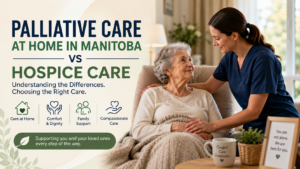
Going through a serious illness is one of the most challenging experiences of life for an individual and for their family. In the middle of all the medical terms, doctor visits, and the pressure to stay busy, you may often hear two words: palliative care and hospice care.
In Manitoba, whether people live in a busy city like Winnipeg or in a quiet rural area, many prefer to stay comfortable in their own homes. However, many people wrongly believe that palliative care means “giving up” or that it is only meant for the final weeks of life. This is a common misunderstanding.
In the real world, the focus of palliative care at home in Manitoba is on living well and being happy for as long as it is possible. It is a type of specialized health care that aims to relieve suffering and the symptoms of a serious illness. If you’re looking for care at home. But you’re not sure of the difference between home palliative care and hospice, this guide will help you make your way through such delicate decisions with dignity and clarity.
Defining Palliative Care:
Palliative care is additional care that is provided alongside your curative treatments. Palliative care is not exclusive to when someone is near the end of their life, but it can be used at any time and age when someone is experiencing a serious illness.
Why “At Home”?
For many Manitobans, home is where the heart – and healing – lies. Having palliative care at home in Manitoba offers patients the chance to be surrounded by their pets, their garden, and their memories. It decreases stress for frequent hospital visits and makes it easier for family members to be more involved in the care process.
Home Palliative Care vs. Hospice: Identifying the Differences
Often, the words are used interchangeably, but they are different philosophies and timeframes within the continuum of care. It is important to realize these differences in order to make informed decisions about end-of-life care in Manitoba.
1. Timing and Eligibility
- Palliative care- May start from the time of diagnosis. It can be given at the same time as at least one other type of treatment, such as chemotherapy or dialysis, that is being used to cure the patient. It is intended to enhance the quality of life during the process of recovery or a management plan.
- Hospice Care- This is usually started when there is no longer any benefit or desire for curative care, and the prognosis is usually six months or less. Hospice is a special branch of palliative care that is devoted to the end of life.
2. The Goal of Treatment
- Palliative Care- Comfort and life prolongation are the aims. It’s a “living with” condition.
- Hospice Care- The focus changes to comfort care at home. The emphasis is on a peaceful, dignified transition and not a cure.
3. Location of Service
- Palliative Care: Oftentimes given in a hospital, clinic, or provided at home.
- Hospice: Can be provided at a special hospice or in the home (such as Grace Hospice or Jocelyn House in Winnipeg).
| Feature | Palliative Care | Hospice Care |
| When does it start? | Through all phases of sickness | When life expectancy is < 6 months |
| May I remain with my doctor? | Yes | Yes, typically in conjunction |
| Curative treatment? | Yes, can be combined | No, only focus on Comfort |
| Where is it given? | Home, hospital, and long-term care | Home, Hospice centers |
Complete understanding of Palliative Care at Home in Manitoba
Many families prefer palliative care at home in Manitoba so loved ones can stay comfortable and close to family. A Palliative Care Coordinator helps manage care plans and supports the family throughout the process. Many people wrongly believe that end-of-life care in Manitoba means giving up hope, but the focus is actually on comfort and dignity.
Respite Care
Respite care in Manitoba is provided at home, providing a chance for family members to get some rest, run errands, or simply catch their breath. This is essential support in keeping the family unit healthy.
What Does Comfort Care at Home Look Like?
If you select palliative care at home in Manitoba, your “team” will probably consist of a number of professionals who visit your home:
- Nurses: Monitor symptoms, administer medications, and educate the family on how to operate equipment.
- Health Care Aides: They help the patient with personal care, including bathing and grooming, to help them look and feel refreshed and respected.
- Physicians: Consultation with palliative specialists on complex pain management.
- Social Workers: Support in legal paperwork (such as Health Care Directives), financial planning, and emotional counselling.
- Volunteers: Look into the volunteer opportunities offered by numerous Manitoba organizations to sit with the patient, provide companionship, or read to the patient.
Choosing the Right Path
The choice of continuing aggressive treatment or switching to comfort care at home is personal. There is no right or wrong; it is only what is right for you and your family.
Questions to Ask Your Health Care Team:
- What is the purpose of this particular therapy?
- What are the expected benefits of taking this medicine/medication?
- Do I need to go to a hospital or clinic for this care?
- What kinds of supports are offered to my spouse/children in Manitoba?
- What happens if there’s an after-hours crisis? In Manitoba, Palliative Care After-Hours Telephone Service is an essential service.
For more details and finding out the perfect choice for you and the patient, contact HomeCare Evernest today, connect with the experts, and start your journey towards a better living situation in the family.